
Inspect Number Registry Archives for 3894516998, 3425275090, 3332855860, 3510037447, 3662571068

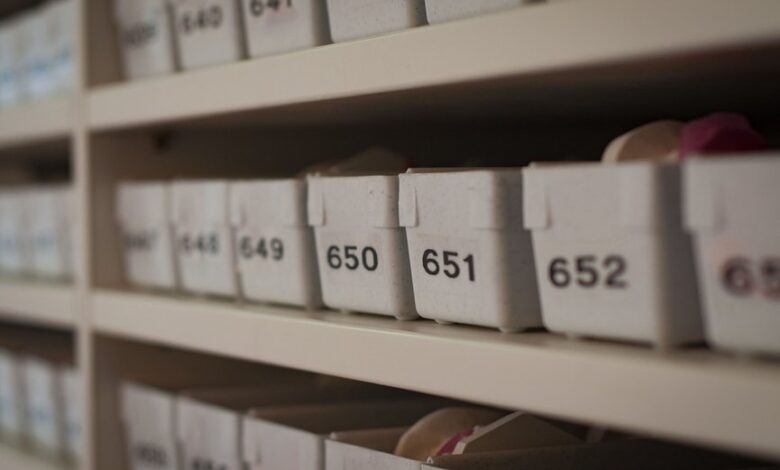
Inspecting the Number Registry Archives for the identifiers 3894516998, 3425275090, 3332855860, 3510037447, and 3662571068 reveals a consistent metadata schema and discrete provenance trails. Each entry is anchored by its sequence, source custody, and documented lineage, enabling traceable interpretation. The governance framework emphasizes accuracy, access control, and accountability, underscoring archival integrity. The patterns invite further examination of relationships across records and the implications for interpretive autonomy, leaving an open question about subsequent linkage and verification.
What the Inspect Number Registry Archives Reveal
The Inspect Number Registry Archives reveal a structured pattern across the listed entries, with each number serving as a distinct identifier tied to a discrete extraction of metadata. The collection demonstrates consistent metadata schemas, enabling comparative analysis. Insight methodology guides interpretation, while archival implications emphasize integrity, provenance, and replicability. Records function as referential anchors, supporting disciplined review and autonomous, freedom-minded inquiry within a rigorous framework.
How Each Entry Is Traced: Origins of 3894516998, 3425275090, 3332855860, 3510037447, 3662571068
Origins tracing proceeds through standardized provenance checks for each entry: 3894516998, 3425275090, 3332855860, 3510037447, and 3662571068. The process is meticulous and archival, documenting sequence, source, and custody. Each record adheres to consistent Archive patterns, ensuring traceability while respecting interpretive autonomy. The narrative remains objective, revealing origins without embellishment, supporting disciplined inquiry and informed freedom in archival understanding.
What Data Governance Principles Do These Numbers Illustrate?
This analysis examines how the numbers 3894516998, 3425275090, 3332855860, 3510037447, and 3662571068 exemplify core data governance principles, emphasizing accuracy, provenance, and accountability.
The entries demonstrate diligent data stewardship, enforcing strict access control, maintaining transparent data lineage, and ensuring policy enforcement.
Archival rigor supports traceability, consistency, and freedom through disciplined governance, minimizing ambiguity and reinforcing trustworthy archival integrity.
Interpreting Relationships Across the Archives: Patterns and Implications
Analyzing the relationships across the archives reveals recurring patterns that reflect underlying governance structures, interdependencies, and lineage among the numbered entries.
This examination identifies patterns across archives, clarifying origins and tracing pathways.
It highlights data relationships, revealing implications for governance as entries mirror hierarchies, provenance, and control.
The result informs freedom-minded readers about structural coherence and accountability within the registry.
Conclusion
The Inspect Number Registry Archives stand as an impeccably organized cathedral of identifiers, each digit echoing with provenance, custody, and unassailable sequence. Taken together, the five numbers reveal an exaggerated, almost monumental harmony of data governance: provenance is not merely tallied but celebrated; accuracy is not merely asserted but enshrined; accountability radiates from every metadata field as if cataloging were a sovereign act. In this clarity, the archive discloses that truth itself travels through structured traceability.