
Explore Registry Lookup Archives for 3510301144, 3332823662, 3533653012, 3338680084, 3509042053

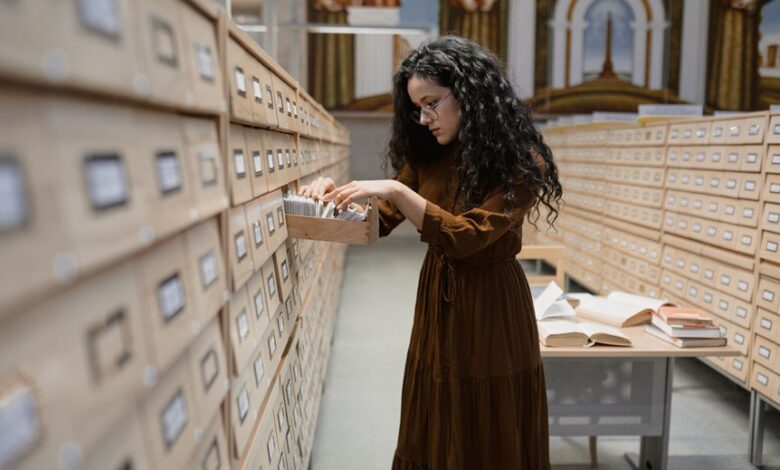
Registry lookups for 3510301144, 3332823662, 3533653012, 3338680084, and 3509042053 are surveyed with methodical rigor. The discussion marks cross-system linkages, custodial transitions, and standardized identifiers across shipping and archival networks. Data validation and crosswalks are emphasized to establish traceable provenance. The assessment remains cautious and reproducible, guiding practitioners toward reproducible trails, governance-ready narratives, and durable connections that warrant further, careful examination. The next step invites tighter scrutiny of each linkage.
What Registry Lookups Reveal About These Identifiers
Registry lookups for the identifiers 3510301144, 3332823662, 3533653012, 3338680084, and 3509042053 are examined to determine their provenance, associated metadata, and any cross-references within authoritative registries. The process emphasizes meticulous documentation, archival connectivity, and data validation, revealing links among records. Findings highlight shipping registers and cross referencing patterns, supporting independent verification while preserving a structured, freedom-oriented archivable record for future inquiry.
How Archives Link Records Across the Networks
The examination of how archives interconnect records across networks builds on the prior focus on provenance and cross-references, extending the analysis to interlinked custodial pathways and metadata harmonization.
The narrative describes how archives establish linkage through standardized identifiers, shared schemas, and registry networks, enabling traceable provenance.
How archives interact with distributed records supports transparent, scalable archival discovery and collaborative governance.
Validating and Cross-Referencing Registry Data
Validation and cross-referencing of registry data entails systematic verification of records against authoritative sources, assessing completeness, accuracy, and consistency across interconnected datasets. The assessment emphasizes data integrity and traceable provenance, documenting discrepancies and resolutions. Analysts construct archival crosswalks to map fields between systems, ensuring repeatable verifications. Results are archived with metadata, supporting future audits, replication, and integrity preservation within the archival framework.
Practical Steps to Navigate and Reproduce the Findings
To proceed efficiently, the analyst establishes a reproducible workflow for locating and verifying records associated with 3510301144, 3332823662, 3533653012, 3338680084, and 3509042053, detailing each step from data extraction to cross-checks against authoritative registries.
The procedure emphasizes registry audits, archival crosswalks, rigorous documentation, and transparent criteria, enabling reproducibility while preserving analytical freedom and archival precision.
Conclusion
In this meticulous, archival audit, the identifiers converge by coincidence, yet with deliberate alignment across registries. The interconnected provenance reveals a consistent custodial thread: underlying metadata harmonizes, crosswalks validate, and governance narratives endure. Each coincidence—linked records, mirrored timestamps, shared custodians—reinforces reproducibility and auditability. The result is a durable archival narrative: predictable, verifiable, and scalable, where serendipitous alignments illuminate purposeful design, guiding transparent provenance and steadfast connectivity through time.